Overview
Restitution and Restorative Development Plan
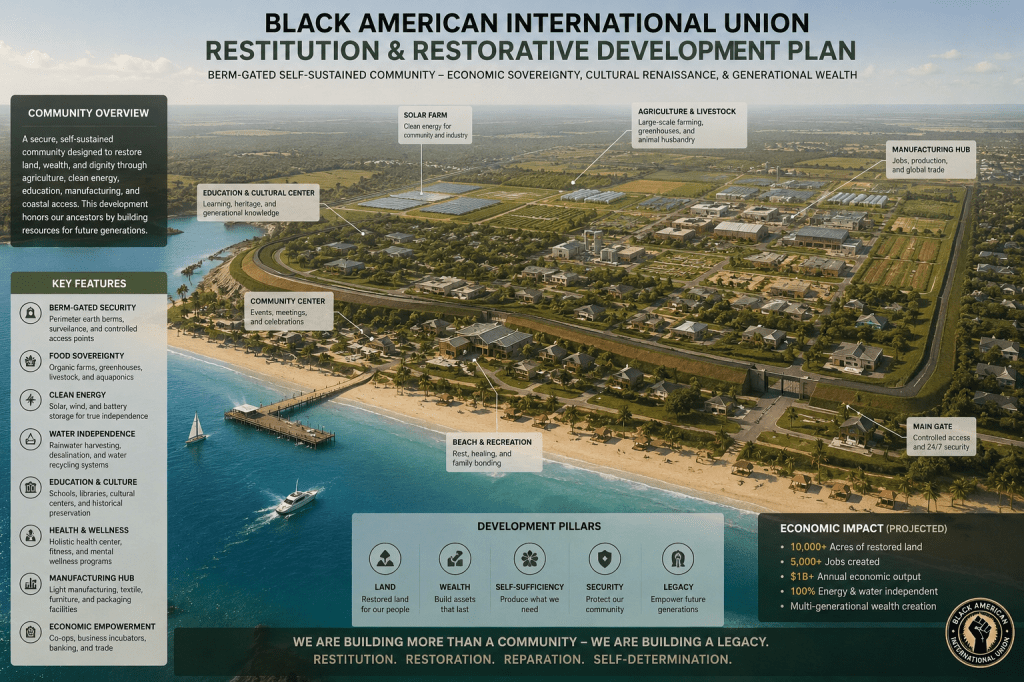
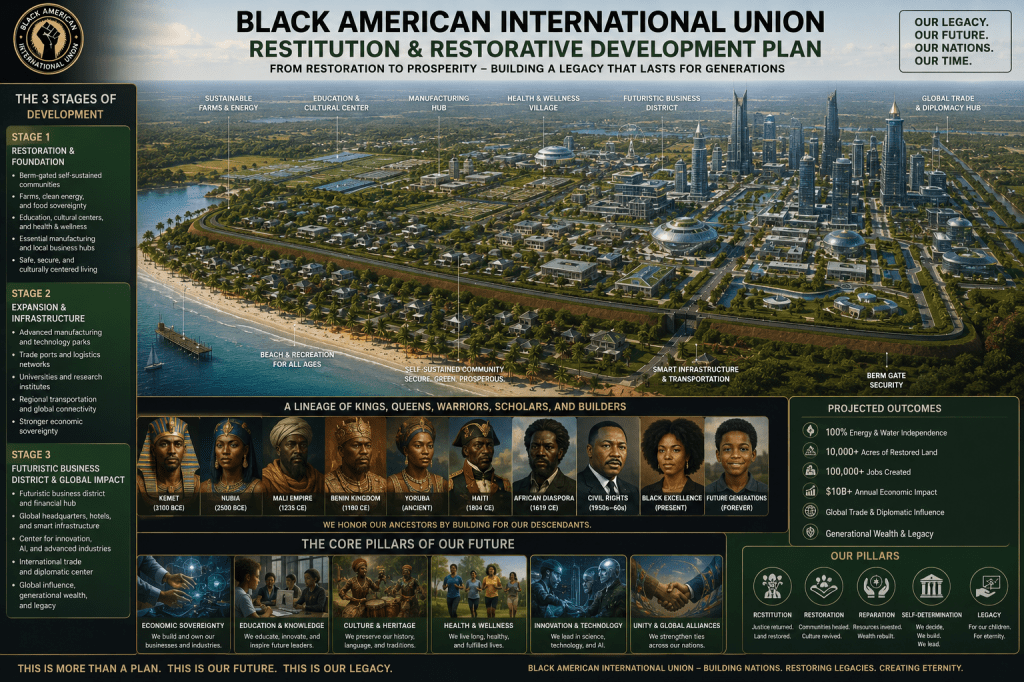
Restitution and restorative compensation are grounded in documented historical harm, loss of economic opportunity, and restricted access to land, capital, and institutional resources.
This plan outlines both:
- the basis for restitution
- a forward focused strategy to restore economic strength, national productivity, and long term sustainability
1. Basis for Restitution
Restitution is rooted in documented historical conditions, including:
- Forced labor systems
- Legal and social restrictions on property ownership
- Denial of access to capital and economic systems
- Destruction or displacement of established communities
- Reclassification and loss of legal identity
Core Principle
Restitution is not symbolic.
It is the restoration of:
- economic position
- land access
- generational opportunity
- structural equity
2. Forms of Restorative Compensation
Restoration may include structured combinations of:
Land Access and Development
- Agricultural land grants
- Community development zones
- Infrastructure backed land programs
Financial Investment
- Direct capital programs
- Business development funds
- Cooperative economic systems
Institutional Access
- Education funding
- STEM investment pipelines
- Technology and trade training systems
Community Restoration
- Rebuilding historically impacted communities
- Housing development
- Local economic ecosystems
3. National Benefit Strategy
This plan is structured to:
- strengthen the national economy
- increase production capacity
- reduce dependency on external systems
- generate long term tax revenue
- create sustainable industries
4. Economic Recovery Through Innovation
Glass Recycling into Sand and Coastal Restoration
- Recycle glass into usable sand material
- Restore beaches and coastal environments
- Support wildlife ecosystems
- Expand tourism and local economies
Plastic Recycling and Manufacturing
- Convert plastic waste into 3D printing materials
- Develop domestic manufacturing systems
- Reduce environmental waste
- Create scalable production industries
Circular Production Model
- Waste becomes raw material
- Local production replaces external dependency
- Continuous recycling reduces cost and increases output
5. Energy and Infrastructure Development
Biodigester Systems
- Convert organic waste into usable energy
- Reduce landfill dependency
- Create local energy production systems
Water Turbine Energy
- Develop small scale and large scale turbine systems
- Generate renewable energy from water flow
- Strengthen infrastructure resilience
Water Filtration and Access
- Advanced filtration systems
- Clean water infrastructure development
- Agricultural and community use
6. Agriculture and Food Systems
- Sustainable farming systems
- Soil restoration
- Controlled environment agriculture
- Local food production networks
7. STEM and Workforce Development
Investment into:
- Engineering
- Environmental science
- Energy systems
- Manufacturing technology
- Agricultural science
Goal
Create a workforce capable of:
- building infrastructure
- running advanced systems
- sustaining long term economic growth
8. Self Sustaining Economic Model
This system is designed to:
- generate internal revenue
- reduce reliance on external supply chains
- build long term economic independence
- create continuous reinvestment cycles
Core Model
Investment → Production → Revenue → Reinvestment → Expansion
9. Debt Reduction Strategy
This plan contributes to national debt reduction by:
- increasing domestic production
- expanding taxable industries
- reducing import dependency
- creating exportable technologies and materials
10. Long Term Outcomes
- Stronger domestic economy
- Environmental restoration
- Job creation
- Infrastructure development
- Technological advancement
- Increased national stability
- Pr
Final Statement
Restitution and restorative compensation are not solely corrective measures.
They are strategic investments into national growth, economic strength, and long term sustainability

